Your Journey to Dynamics 365 Starts Here!
Fill in your business details and let
us be your partner in growth.


 Lancaster, Ohio, United States
A well-known firm in the United States that prints labels and packages works in a market where quality and first impressions are very important. The company makes bespoke labels for a variety of industries that need packaging that looks good and is technically correct.
The company gets a lot of requests for designs, inquiries, and production since it has been in business for decades and keeps investing in new printing technologies. Their teams take care of everything from the first contact with a customer to the final delivery. This requires good coordination between sales, operations, and customer support.
As the firm grew, it felt more pressure to keep things consistent across its customer interactions. Sales teams were handling more leads and prospects, but their systems were broken and they couldn't see everything, which made things less efficient. As customers' needs changed, the requirement for a CRM platform that was connected, responsive, and based on data grew increasingly important.

For its operations, the company was dependent on a legacy CRM environment that was no longer in accordance with its operational expectations or growth rate. Teams frequently relied on manual updates and disconnected tools to manage customer relationships, as sales processes lacked consistency.
Disjointed Sales ProcessesSales were done with a lot of different platforms, which made it hard to keep track of leads, prospects, and client contacts in a consistent way.
Limited Visibility into PipelineLeadership teams had a hard time getting a clear, up-to-date picture of sales performance, opportunity phases, and revenue estimates.
Manual Data Entry and RepetitionSalespeople had no choice but to spend a lot of time manually entering and updating information, which made mistakes more likely and left less time for interacting with customers.
Lack of Seamless IntegrationThe current CRM system worked alone and didn't connect well to important business platforms including ERP, communication tools, and the corporate website.
Delayed Customer Response Times Without automated workflows and warnings, follow-ups and replies were typically late, which made the customer experience worse.
Inconsistent Customer DataCustomer information was spread out and occasionally duplicated, which made it hard to have a single, accurate picture of accounts and contacts.
Dependence on Manual NotificationsImportant updates like lead assignments or changes to opportunities had to be communicated manually, which made it harder for people to work together in tandem.
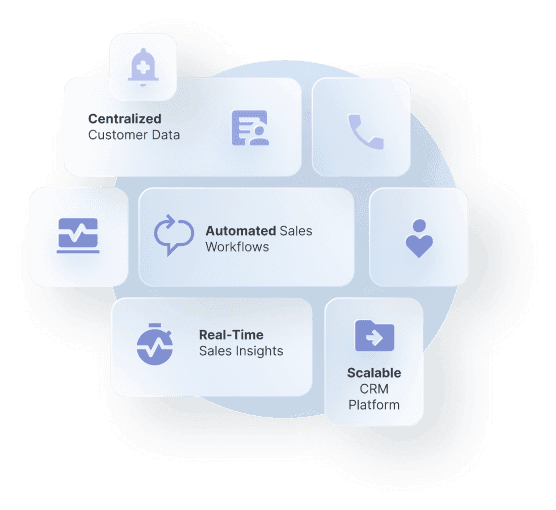
The organization made it clear what it wanted from a contemporary CRM solution that could help its sales operations grow by making them more organized, faster, and clearer.
Centralized Customer DataA unified system to manage leads, accounts, contacts, and opportunities with complete visibility across teams.
Automated Sales WorkflowsAutomation for repetitive tasks such as lead assignment, follow-ups, and communication triggers.
Real-Time Sales InsightsAccess to dashboards and reporting tools that provide accurate and up-to-date performance metrics.
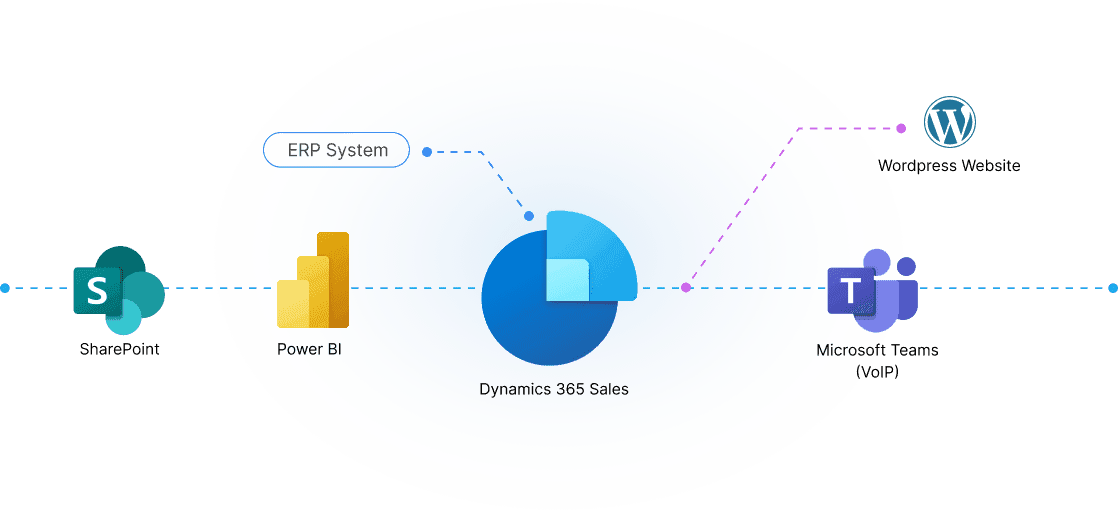
Seamless System IntegrationStrong connectivity with ERP, communication tools, and digital platforms to ensure smooth data flow.
Better Customer EngagementQuicker responses and steady communication throughout the sales cycle.
Scalable CRM PlatformA system capable of handling more users, more features, and more growth in the future.
The main objective was to set up a modern CRM platform that would make sales easier and let teams work together and see what's going on.
Structured Sales ManagementSet up a clear and consistent way to handle leads, prospects, and customer contacts.
Automation of Key ActivitiesMake routine sales tasks easier by using automated workflows and reduce the need of manual intervention.
More Accurate DataMake customer and sales data all come from one place to make it more reliable and help in decision-making.
Integrated Business EnvironmentConnect CRM with ERP and other collaboration tools for working together to support end-to-end operations.
Actionable Reporting and InsightsEnable leadership with dashboards and analytics for better planning and forecasting.
Improved Team ProductivityAllow sales teams to focus more on selling by minimizing administrative work.
Dynamics Square deployed Microsoft Dynamics 365 Sales CRM to transform the company's sales processes more connected and efficient. The solution took care of the most important sales functions and worked well with other business apps that were already in place.

The deployment of Dynamics 365 Sales CRM led to clear improvements in both sales operations and customer interactions.
Improved Sales EfficiencySales teams now operate within a structured system that reduces manual work and supports faster deal progression.
More Control and VisibilityLeadership can see real-time dashboards that provide them clear information on pipeline performance and revenue forecasts.
Faster Response Times Automated processes make sure that leads are handled swiftly, which makes the customer experience better overall.
Accurate and Consistent DataA centralized database makes sure that all teams are using accurate information and that there is no duplication.
Seamless CollaborationIntegrated tools enable smooth communication between departments, reducing delays and misunderstandings.
Less Work for the AdministrationSalespeople can spend more time building relationships and closing deals when mundane tasks are automated.
Scalability for Future GrowthThe CRM platform is built to handle more users, new processes, and future improvements without any disruptions.
Working with Arish and his Dynamics team has been an outstanding experience. We came to them with a challenging timeline and a complex environment, and they delivered a full Dynamics implementation in just three months, without cutting corners and at a very reasonable cost.
What truly sets them apart is their expertise and willingness to go the extra mile. Whether it was handling our customizations or integrating Dynamics with our on-prem Production ERP, they approached every challenge with professionalism, creativity, and a can-do attitude.
If you’re looking for a Dynamics partner who is fast, knowledgeable, and genuinely invested in your success, Arish’s team is the one.”
Before the CRM implementation, the firm managed sales through several systems that made things less efficient and made it hard to see things in real-time. Teams typically had to coordinate by manually, which made things take longer and less consistent. Now that the company has Dynamics 365 Sales CRM, it can work in a single environment that supports every step of the customer journey and overall experience.
Easier to Get and Convert Leads Website leads are automatically recorded and assigned, so no opportunity is missed.
Sales and Operations in Sync Integration with ERP and collaboration tools connects sales activities with production and delivery processes.
Real-Time Decision-Making Dashboards and analytics provide leadership with the insights needed to make informed decisions quickly.
Consistent Customer Experience Structured workflows and automated communication make sure that every engagement with a customer is professional, and most importantly, on time.
Higher Productivity Across Teams Sales reps spend less time on paperwork and more time talking to customers and closing sales.