Your Journey to Dynamics 365 Starts Here!
Fill in your business details and let
us be your partner in growth.

Microsoft Dynamics 365 for the manufacturing industry serves as the central control that keeps operations well-synced across inventory, supply chain planning, production, engineering, and finance. It is able to do so because of built-in agentic AI capabilities powered by Microsoft Copilot.

Microsoft Dynamics 365 for manufacturing a suite of ERP solutions designed to support end-to-end manufacturing operations and the way these companies actually operate. It brings core production and business functions together, helping manufacturers plan accurately, execute consistently, and respond faster to operational change.
At its core, Dynamics 365 for the manufacturing businesses in the USA helps:
Coordinate inventory, supply chain, production, engineering, and finance within one platform
Manage production planning, bills of materials, routing, and shop floor activity with real-time visibility
Track materials, work in progress, and finished goods across the full production cycle
Strengthen supply chain coordination through integrated procurement and demand forecasting
Use built in AI agents and Microsoft Copilot to support forecasting, automation, and decision guidance
Support demand visibility and order alignment through CRM tools like Dynamics 365 Sales, where customer insight directly informs production planning

For manufacturing operations to go smoothly, it requires strict coordination between people, processes, and systems. This is important for manufacturing businesses because even if one element loses alignment, it spreads disruptions instantly across production, inventory, supply chain, and financial operations.
Many manufacturers in the USA face recurring challenges that limit efficiency, visibility, and decision-making confidence. Let’s check out those challenges one by one:

For production planning, several manufacturing companies in the USA still bank on fragmented data pulled from multiple systems. As a result, inventory availability, machine capacity, and demand signals remain misaligned, making it difficult to create reliable production schedules. This causes your teams to spend valuable time in collating information instead of executing plans.

Manufacturing businesses operating on outdated manufacturing ERP systems notice data being updated in batches rather than real-time. As a result, this causes teams to operate with delayed insight into inventory levels, shop floor activity, and supply chain status. Decisions based on dated information increase the risk of delays, rework, and missed commitments.

Constant flow and availability of material is critical to manufacturers in the USA. This helps in ensuring uninterrupted production process. To a manufacturing firm, supplier delays, demand variability, and manual procurement are inevitable many times and also create uncertainty throughout the supply chain. When you don’t have a system that helps you with end-to-end visibility, identifying and mitigating risks on time become challenging.

Revenue margins take a hit when operational expenses start increasing and things become even worse when resource inefficiency becomes a norm. It happens when you don’t have a system to tackle challenges like manual processes, duplicated effort, and lack of automation. Besides, poor visibility in material usage, labor efficiency, and machine performance makes cost control harder across production cycles.

This is where many manufacturing companies in the USA struggle a lot. Maintaining consistent quality is paramount to succeeding in the market. However, it requires structured inspection processes and accurate documentation. You can’t expect this from a disconnected system as it makes it difficult to track deviations, enforce standards, and demonstrate compliance across production stages.

Reactive maintenance can deprive your goal of cornering the market. When downtimes become more frequent than often, it can severely impact your production schedules and increase the cost pressure. It is harsh but true that many manufacturers in the USA rely on reactive maintenance due to limited insight into equipment performance and usage patterns.
Manufacturing businesses can operate with different processes. In general, there are two primary models: process manufacturing and discrete manufacturing. Each one is different from the other in terms of how products are produced, tracked, and delivered. Understanding these two types helps clarify why manufacturing systems require flexibility and accurate process control.
Both manufacturing types, process and discreate, benefit from connected ERP platforms like Microsoft Dynamics 365, which support varied production models within a unified operational framework.
Process manufacturing focuses on producing goods in continuous or batch-based flows, where raw materials combine to create a finished product. These products usually remain uniform rather than assembled as individual units.
Common characteristics include:
Process manufacturers rely on systems that support batch tracking, quality consistency, and precise material usage across production cycles.
Discrete manufacturing centers on assembling individual products from distinct components. Each item can be counted, tracked, and configured independently.
Common characteristics include:
Discrete manufacturers rely on systems that provide precise control over components, assembly processes, and production scheduling while maintaining accurate inventory tracking.
Unify planning, production, inventory, and finance with a single Dynamics 365 platform built for manufacturing scale.
Talk to Manufacturing ExpertsManufacturing operations do not run on a single system or a single department. They rely on multiple capabilities working together, from production planning and inventory control to finance, sales, and analytics. Microsoft Dynamics 365 supports manufacturing through a connected set of solutions, each designed to handle a specific operational responsibility while sharing the same data foundation.
Instead of forcing manufacturers into one rigid ERP model, Dynamics 365 allows organisations to adopt the solutions that match their scale, complexity, and production environment.

Supply Chain Management supports manufacturers with complex production environments, high transaction volumes, or multi-plant operations. It enables advanced production planning, materials requirement planning, warehouse management, quality control, and asset maintenance. This solution is well suited for manufacturers that require deep control over inventory flows, capacity planning, and supplier coordination.
Get started
Finance connects manufacturing activity directly to financial outcomes. It provides real-time cost tracking, budgeting, forecasting, and financial reporting across production cycles. Manufacturers use it to gain accurate insight into material costs, labour efficiency, overheads, and profitability while supporting compliance and multi-entity financial structures.
Get started
Sales plays a critical role in manufacturing by connecting customer demand with production planning. Sales orders, forecasts, and pipeline data feed directly into supply and production decisions. This alignment helps manufacturers respond faster to demand changes while reducing overproduction, shortages, and last-minute scheduling disruptions.
Get started
Business Central is designed for small and mid-sized manufacturers that need strong core ERP capabilities without unnecessary complexity. It supports production orders, bills of materials, routing, inventory management, procurement, and financials within a single system. For growing manufacturers, it provides operational control, traceability, and real-time visibility without the overhead of enterprise-scale systems.
Get started
Business Central is designed for small and mid-sized manufacturers that need strong core ERP capabilities without unnecessary complexity. It supports production orders, bills of materials, routing, inventory management, procurement, and financials within a single system. For growing manufacturers, it provides operational control, traceability, and real-time visibility without the overhead of enterprise-scale systems.
Get started
Microsoft Copilot and built-in AI agents enhance manufacturing operations across Dynamics 365 by supporting forecasting, planning, and decision-making. They help identify demand changes, inventory risks, capacity constraints, and cost variances using real-time operational data. These AI capabilities work within existing production, supply chain, finance, and sales workflows, helping teams act faster while maintaining operational alignment.
Get startedDynamics 365 delivers core manufacturing capabilities that help organisations plan accurately, execute consistently, and maintain control across production, inventory, supply chain, and financial operations.
Dynamics 365 helps manufacturers create realistic production plans aligned with demand, capacity, and material availability.
Key aspects include:

Manufacturers gain real-time visibility and control over inventory across all production stages and locations.
Key aspects include:

Dynamics 365 connects procurement activities directly with production and inventory requirements.
Key aspects include:

Quality processes are embedded into manufacturing workflows to support consistency and compliance.
Key aspects include:

Dynamics 365 helps manufacturers manage equipment reliability and maintenance planning.
Key aspects include:

Production activities are directly connected to financial outcomes within Dynamics 365.
Key aspects include:

Dynamics 365 combines Copilot with purpose-built AI agents to make manufacturing workflows more intelligent, proactive, and less manual. These AI capabilities surface insights, automate routine work, and help teams act earlier on risks and opportunities without adding separate tools or systems.
Key aspects include:
Copilot summaries & insights:
Natural-language summaries for demand plans, inventory status, and workload views.
Demand Forecasting AI:
Predict demand using machine learning models and signals.
Workload Insights Agent:
Highlights pending tasks and warehouse workload.
Supplier Communications Agent:
Automates routine procurement follow-ups.
Anomaly detection:
Identifies outliers in plans and inventory using AI models
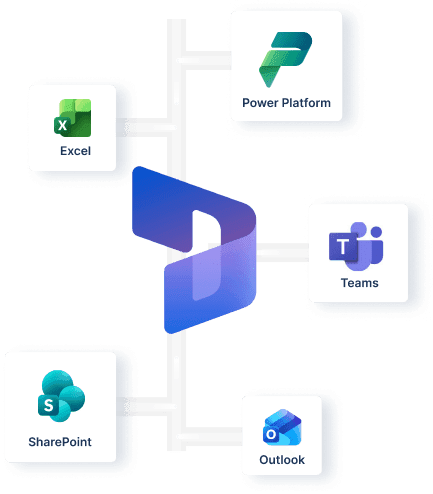
Dynamics 365 extends manufacturing operations through tight integration with the broader Microsoft ecosystem. This ensures data flows seamlessly across systems while keeping manufacturing teams connected and informed.
Key aspects include:
Implement Dynamics 365 with industry alignment, minimal disruption, and a roadmap that supports long-term manufacturing growth.
Schedule a Manufacturing Consultation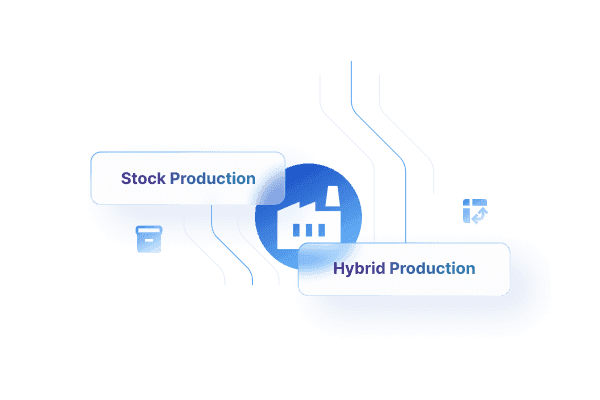
Dynamics 365 supports diverse manufacturing models without forcing process compromise. Its flexibility allows manufacturers to adapt the system to their production strategy.
Key aspects include:
Dynamics 365 manufacturing implementations focus on operational continuity and long-term scalability. The approach aligns technology with real production processes.
Key aspects include: